
Pallet Delivery in the UK: How to Choose the Right Service and Avoid Common Mistakes
Pallets are designed to be moved by forklift or pallet truck, which makes loading and unloading far quicker than handling individual boxes.
14:30 22 October 2026
Most businesses come to pallet delivery the same way.
A parcel carrier stops working. The goods are too heavy, too bulky, or too numerous to keep shipping as individual parcels. Someone suggests pallets. And then the questions start: What size pallet? Which service? How does pricing work? What happens if it goes wrong?
The good news is that pallet delivery is straightforward once you understand the basics. The mistakes most businesses make come from not knowing the options available to them, or from booking on price alone without understanding what they're actually getting.
This guide covers what you need to know to book pallet delivery for UK businesses with confidence, whether you're shipping for the first time or looking to improve an existing setup.
What counts as a pallet shipment
A pallet is a flat wooden platform that goods are stacked and secured on for transport. Pallets are designed to be moved by forklift or pallet truck, which makes loading and unloading far quicker than handling individual boxes.
Standard UK pallet sizes vary by provider, but broadly you're looking at three categories.
A full pallet typically measures 120 x 100 cm and can carry up to 1,200 kg, with a maximum height around 220 cm including the pallet itself. A half pallet is the same footprint but capped at around 500 kg and 110 cm height. A quarter pallet is smaller still, with a maximum weight around 250 kg.
Your goods need to be stacked within those dimensions and secured with stretch wrap or strapping before collection. Most providers require you to supply the pallet and wrapping. Getting this right matters. Goods that aren't secured properly can shift in transit, which causes damage and can result in a refused delivery.
Express, economy, and what the difference actually means
Pallet delivery services are generally tiered by speed.
Express or premium services target next working day delivery within mainland UK. These are more expensive but necessary when you're supplying a business with a strict goods-in window, when stock urgency matters, or when a delayed delivery has a knock-on cost to your customer.
Economy services typically deliver within 48 hours to most UK destinations, and three to five days for more remote locations like the Scottish Highlands or offshore addresses. For non-urgent stock replenishment or less time-sensitive freight, economy pricing can save you a meaningful amount per consignment.
Ask which tracking, delivery-window and electronic proof-of-delivery features are included in the service you are booking. Availability varies by provider and route.
How pallet delivery is priced
There is no single pallet delivery rate. Pricing depends on the pallet size and weight, the collection and delivery postcodes, the service tier you choose, and the volume you're shipping.
The biggest lever you have is flexibility on timing. If you can give a provider a wider delivery window or shift your regular collections to fit their existing routes, that tends to bring the cost down. Providers build their schedules around their existing routes. The easier you are to fit in, the less it costs to serve you.
Volume matters too. A business shipping ten pallets a week has more negotiating room than one shipping ten a month. If you're at the lower end, groupage is your best option: your consignment shares a vehicle with other freight going in the same direction, and you pay only for the space you use.
One thing to watch on pricing is how surcharges are presented. Fuel surcharges, Clean Air Zone charges for deliveries into city centres, and peak-period uplift can all add to the base rate. A good provider presents these transparently and itemises them on invoices. A provider that bundles surcharges into the headline rate makes it harder to track your actual freight spend or identify where costs are rising.
Choosing a provider: the questions that matter
Price gets most of the attention when businesses are choosing a pallet delivery provider. It shouldn't be the only consideration.
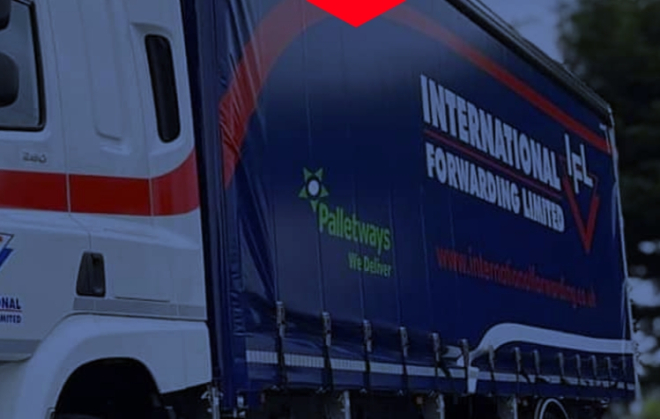
Ask about their network. A provider that belongs to an established pallet network, such as Palletways, gives you access to a broad delivery infrastructure rather than relying on a single operator's own fleet. That means more consistent service across more destinations.
Ask about tracking, delivery windows and electronic proof of delivery. These tools can help you keep customers informed, but confirm what is included in the selected service.
Ask about their customer service process. Delays and exceptions happen in every freight operation. The question is how a provider responds when something goes wrong. A dedicated contact, a clear claims process, and a history of resolving problems without pushing customers through a call centre are worth more than a rate that's a few pounds cheaper.
Ask whether the vehicle meets the emissions requirements for every zone on the route. Heavy goods vehicles generally use the Euro VI standard; rules and charges vary by location and vehicle class.
Common mistakes businesses make with pallet delivery
Booking without checking the weight and dimensions. Providers may price by pallet category, space, weight or a combination. Confirm the tariff, maximum weight, height and any overhang restrictions before booking.
Not preparing the pallet correctly. Overhang beyond the pallet edge, unstable stacking, or insufficient wrapping are the most common causes of transit damage. The time spent packing a pallet properly is far cheaper than a damage claim.
Choosing economy when the delivery is actually time-critical. If your customer has a goods-in window on Tuesday and you book economy assuming it'll be fine, you're taking a risk. Know your delivery requirement before you choose your service tier.
Not telling the provider about access issues at the delivery address. If the delivery point has restricted access, requires a vehicle with a tail board, or has a specific goods-in entrance, state this when booking. Surprises at the delivery end cause failed deliveries and redelivery charges.
Treating every provider the same. A national pallet network with decades of operating history and an established client base is a different proposition to a smaller carrier offering a lower headline rate. The difference tends to show up when something goes wrong.
When to think beyond UK delivery
If your business is growing into European markets, pallet delivery doesn't have to stop at the UK border.
Established freight providers offer European pallet services to a range of markets. Transit times depend on the route, service and customs clearance. Confirm whether clearance is included or separately charged, and who will supply the import documentation.
According to the Office for National Statistics, the EU remains the UK's largest trading partner by volume. If you're exporting goods to European buyers or fulfilment centres, a provider that offers both UK and European pallet services under one arrangement simplifies your logistics considerably.
How to get started if you haven't used pallet delivery before
Contact two or three providers and ask for quotes on your typical consignment: the weight, dimensions, collection postcode, and delivery postcode. Most providers turn quotes around within an hour.
Compare the service tier, the transit time, and what's included in the rate. Then run a test shipment before committing to a regular arrangement. One consignment tells you more about a provider than any amount of reading their website.
A provider that answers your questions clearly, quotes quickly, and delivers the test shipment without issues has earned the next conversation.


