
When a Bathroom Starts Feeling Worn Out, the Glass May Not Be the Problem
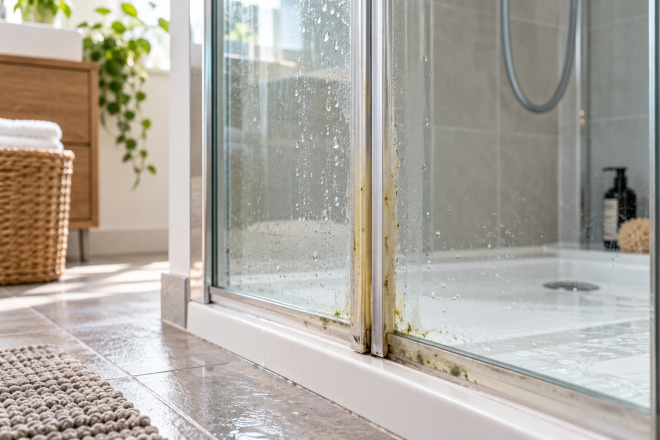
Glass will often outlast the seals fitted around it. While limescale and soap residue can usually be cleaned away
10:54 20 October 2026
A bathroom can start looking tired long before anything major needs replacing.
Limescale gathers around the shower door, the clear seals turn yellow, and greenish marks appear in places that are awkward to clean. Sometimes you only notice the damage when you're wiping down the glass and find a split in the seal, or a small piece that's broken away.
The glass itself might still clean up perfectly well.
If the enclosure is several years old and you can't find the original parts, replacing the whole thing may seem like the simplest option. Before going that far, though, it's worth having a closer look at what's actually worn out.
The Glass Is Fine, but the Seals Have Seen Better Days
Glass will often outlast the seals fitted around it. While limescale and soap residue can usually be cleaned away, the plastic strips are exposed to water and cleaning products every day. Some also bend or rub against other surfaces whenever the door opens.
Eventually, the material may stiffen, curl at the edges or begin to split.
The bottom seal is a good place to look. Dirt tends to collect around the shower tray, making it easy to miss a torn or worn section of the thin fin underneath the door. Side seals can be just as easy to overlook, particularly when the door is normally kept closed.
If a seal is only dirty and still feels flexible, cleaning may be enough. Cracks, missing sections or a strip that no longer sits properly against the glass are different matters.
Why Does Water Still Escape When the Shower Door Is Closed?
There's a small patch of water on the bathroom floor after every shower. You wipe it up, then find yourself doing exactly the same thing the next day. After a while, keeping a towel nearby becomes a habit.
When water appears between two closing glass panels, the magnetic shower door seals are worth checking. They're usually fitted in pairs, with magnets that help the two edges meet when the door shuts. If the plastic has cracked or changed shape, water may find its way through the gap.
Before buying replacements, look at how the glass panels meet. The seal where the shower door closes needs to match both the glass thickness and the closing angle. Some magnetic seals are designed for doors meeting at 90 degrees, while others suit panels that close almost in a straight line.
A door that's dropped out of alignment needs a different sort of attention. Replacing the seals won't correct a loose hinge or bring the glass back into position.
Why Won't a New Seal Fit When It Looks Just Like the Old One?
Finding the right replacement can be more troublesome than removing the damaged strip.
On an older shower door, the original model number may be impossible to find. So you compare photographs, pick something that looks familiar and wait for it to arrive. Then it turns out to be loose on the glass, or the channel is too narrow to fit over the edge.
Even seals with the same cross-sectional shape can come in different sizes. The channel width or length of a fin might vary slightly, enough to stop a replacement fitting as expected.
SIMBA Seals UK has dealt with this problem when customers have reported ordering the wrong size. In one such case, a different size the company had prepared for a commonly confused specification proved to be a better fit. SIMBA keeps ready-made alternatives for certain similar profiles, so a customer whose first SIMBA shower seal doesn't fit may have another suitable option to check rather than starting the search again.
If you still have the old strip, keep it until you've found a replacement. A photograph of the end profile, along with the glass thickness and relevant measurements, gives you much more to go on than a picture of the full length.
What Can You Fix Yourself?
If the glass is intact, the door moves normally and the seal is simply cracked, stiff or loose, replacing it may be a straightforward DIY job once you've found the correct profile.
Cracked glass, loose fittings and a door that's visibly dropped need more care. Where the glass supports or hinges are involved, it's sensible to have an experienced installer take a look.
Sometimes the old shower door still has plenty of life left in it. It's the worn strip around the edge that needs attention.


