
Smart Offices Still Need Human Hands: Why Technology Hasn't Replaced Professional Cleaning
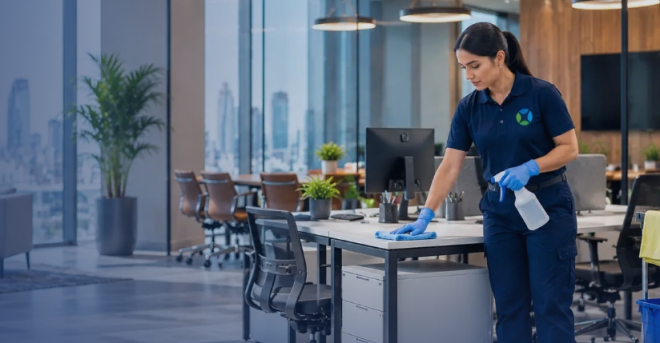
Smart buildings are a genuine step forward, but they raise the bar for cleaning rather than removing the need for it.
23:39 21 October 2026
The modern workplace is smarter than ever. Sensors dim the lights when a room empties, booking apps manage hot desks, air-quality monitors track CO2 in real time, and robot vacuums hum quietly across the floor after hours. It is tempting to assume that technology has the problem of a clean, healthy office under control. It hasn't—and understanding why matters more now than it did a few years ago.
Hybrid working changed the hygiene equation
When desks were assigned and attendance was predictable, cleaning routines were simple. Hybrid and flexible working has changed that completely. Hot-desking means a keyboard, mouse and phone may be shared by several people in a single week. Meeting rooms turn over constantly. Occupancy spikes unpredictably around mid-week peaks. Shared surfaces—the places germs spread fastest—now need more attention, not less, and a static once-a-day routine no longer fits how buildings are actually used.
What the technology can—and can't—do
Automated tools are genuinely useful. Robotic vacuums keep open floors tidy between visits; sensors can flag which spaces are being used and which washrooms need restocking; data can help target effort where it is needed. But these tools handle the easy, repetitive tasks. They do not disinfect high-touch points to a contact time that actually kills viruses, descale a washroom, clean glass and edges properly, or make the dozens of small judgement calls that keep a space genuinely hygienic. A sensor can tell you a room is busy; it cannot clean it.
Clean offices are a productivity and wellbeing issue
There is a solid business case beneath the hygiene one. Workplace illness drives absence, and shared, poorly maintained spaces accelerate the spread of seasonal bugs. A visibly clean, well-cared-for office also signals to employees that their wellbeing is taken seriously—an increasingly important factor in attracting people back to the workplace and keeping them engaged once they are there.
Technology and people, working together
The strongest results come from combining smart tools with skilled human teams. The most effective approach pairs automation and occupancy data with professional office cleaners who map high-touch points, adjust frequencies to real usage, disinfect correctly and handle the detailed work machines cannot. The technology tells you where the pressure is; trained people apply the right method, in the right place, to the right standard.
The bottom line
Smart buildings are a genuine step forward, but they raise the bar for cleaning rather than removing the need for it. As offices become more flexible, more shared and more data-rich, the organisations that stay healthy and presentable will be the ones that treat professional cleaning as an essential partner to their technology—not an expense the software has made redundant.


