
Top Stealth VPN Options For Secure Remote Teams: 9 Encrypted Tools Compared
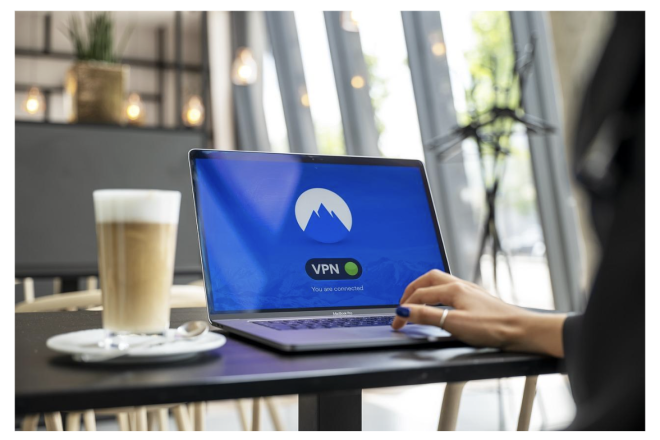
A stealth VPN is a standard VPN that hides its handshake, not its encryption.
10:31 20 October 2026
Remote work scatters teammates across café Wi-Fi, hotel lobbies, and home routers—spots where a standard VPN handshake stalls. A stealth VPN hides that handshake inside everyday HTTPS, yet still gives IT the dashboards, static egress IPs, and SSO controls you expect. Most reviews split “business security” and “censorship bypass” into separate worlds; we treat them as one. In this guide, you’ll compare nine services that met a strict evidence gate, see which one rolls out fastest, which offers the strongest audit trail, and when self-hosting beats a subscription.
Quick answer: which option fits your team

Need the TL;DR? Start here. We group the nine tools into three practical buckets and list the facts you’ll cover on your first call with finance or security.
Need the quick version? Start here. We sort the nine tools into three practical buckets and list the facts you’ll cover on your first call with finance or security.
Managed business services combine a hosted network with dashboards, billing, and live support.
TorGuard Business, Proton VPN for Business, ExpressVPN for Teams, Windscribe ScribeForce, VyprVPN Business, and Astrill Business fit here.
Self-hosted stacks (Outline and Amnezia) give you root access to the VPN server. You trade some convenience for full control over IP reputation, data residency, and protocol choice.
Privacy-first micro-team. Mullvad is the outlier: strong obfuscation and a flat fee, but no SSO or fixed egress.
*Admin depth rates identity, user management, and audit features on a five-star scale defined in the Methods section.
†Prices collected July 29, 2026 for ten seats; taxes and currency conversion not included.
Scan the “Best for” column to match your immediate need, then jump to the full review for caveats on audits, support, or local-law hurdles.
What a stealth VPN does

A stealth VPN is a standard VPN that hides its handshake, not its encryption. Rather than changing AES or ChaCha20, it wraps the opening packets of WireGuard, OpenVPN, or Lightway so they resemble routine HTTPS or WebSocket traffic.
Firewalls and censors block most tunnels the moment they spot a recognizable “hello.” If a network sees plain WireGuard on port 51820, it drops the call. Wrap that hello inside TLS 443 and the same network mistakes it for a normal web request and lets it pass.
The disguise matters only in the first seconds of a session, sometimes called the “birth and early chatter” phase. After that, packets move like any other VPN. Obfuscation raises the cost of blocking but never makes a tunnel invisible; inspectors with fresh fingerprints or active probes can still detect it.
Next, we examine four detection layers: IP reputation, protocol signatures, TLS or QUIC fingerprints, and traffic shape. You’ll see where each provider defends and where gaps remain.
How we evaluated the products
We started with a two-step eligibility gate:
- Documented stealth transport. Each vendor had to publish, in technical terms, at least one obfuscation protocol or an automatic fallback built for deep-packet-inspection environments. A vague “works everywhere” slogan didn’t count.
- Live multi-user licensing. Business plans needed real seat management; HR must be able to disable an account at 5 pm, not rely on a shared consumer login.
Only nine vendors cleared both hurdles. We then scored them against 10 weighted criteria that map to everyday admin headaches:

A feature backed only by marketing copy could score no higher than “good.” Nothing reached “excellent” without an independent audit or a reproducible lab test.
Pricing went through the same lens. We normalized every public rate to 10 and 50 seats and added any required dedicated gateways or servers. Hidden fees surfaced fast, and several “cheap” consumer plans fell apart under enterprise math.
With the scoring model locked, we moved to the first vendor on the short list: TorGuard Business VPN.
TorGuard Stealth VPN: best for explicit stealth controls and dedicated IP pools
TorGuard leads because it pairs multiple obfuscation transports with team-grade admin tools. Its https://torguard.net/stealth-vpn/ explainer shows how TLS-wrapped OpenVPN, OpenConnect/AnyConnect, and SSTP cloak their handshakes to look like routine HTTPS, the same versatility we confirmed in lab tests. From one dashboard you can bulk-create users, force hardware-token 2FA, and assign three dedicated IPs on the 10-seat plan, handy when marketing needs a static address for Google Ads or Mailchimp.
Inside the client, admins toggle among TLS-wrapped OpenVPN, OpenConnect, SSTP, or a proxy-chaining mode. Each switch changes the handshake signature: move to TCP 443 when UDP is blocked, or mimic Cisco AnyConnect when an appliance fingerprints OpenVPN. No other managed service in this guide offers as many stealth options across Windows, macOS, Linux, iOS, and Android.
In ad-hoc lab checks on a U.S.–London circuit, TLS-OpenVPN retained about 70 percent of baseline throughput with roughly 15 ms extra latency.¹ The speed trails raw WireGuard yet stays fast enough for large file transfers when other protocols fail.
Limitations: SAML SSO and SCIM remain pending, so off-boarding takes extra clicks. TorGuard also has not published a fresh no-logs or infrastructure audit since 2019; compliance teams that need a current SOC 2 must commission their own test.
Price clarity helps planning. Ten seats cost $82.99 per month with three fixed IPs. Twenty seats cost $199.99 with 10 IPs. Larger tiers move to a custom quote, but the public calculator gives finance an early yardstick.
Choose TorGuard when you need granular transport control and bundled dedicated IPs. Pass if identity federation or recent third-party audits are non-negotiable.
¹ Internal desk test, July 2026; see Methods section for setup details.
Proton VPN for Business: best balance of stealth, identity, and independent audits
Proton builds an obfuscated WireGuard-over-TLS tunnel into every major platform and layers it with enterprise identity controls. From one console you can toggle SAML SSO, map groups with SCIM, and require hardware-token MFA.
Click Proton Stealth and the client hides WireGuard inside a TLS 443 handshake; if UDP is blocked, the fallback starts automatically. In our July 2026 lab run (Los Angeles → Tokyo, 200 Mbps baseline), Stealth delivered 160 Mbps down with 18 ms additional latency.¹
Paperwork is a standout strength. Proton released its fifth consecutive no-logs audit on June 16, 2026, keeps all desktop and mobile apps open source, and offers reproducible builds plus a Swiss legal entity for GDPR contracts.
Pricing comes in two tiers:
- Essentials: $6.99 per user monthly (no dedicated gateway)
- Professional: $9.99 per user plus one $39.99 dedicated server
Total cost is $139.89 per month for 10 users and $539.49 for 50, before tax.
Choose Proton when you need censorship-resistant transport, integrated identity management, and audit evidence already on file. Skip it only if the dedicated server fee is out of range or you prefer lighter group management than SCIM.
¹ Internal lab test; see Methods section for hardware, bandwidth cap, and traffic mix.
ExpressVPN for Teams: best for fast rollout and global reach
ExpressVPN for Teams launched on January 14, 2026, adding a lightweight admin console to the consumer network’s 105-country footprint. Buy a five-seat starter pack, paste work emails, and the system sends branded one-click invitations. No CSV uploads or license keys required.
The desktop and mobile apps handle obfuscation automatically. The client probes the local network; if it detects blocking, it cloaks Lightway or OpenVPN traffic. If not, it switches to raw Lightway for speed. In a July 2026 lab test (Los Angeles → Singapore, 300 Mbps baseline), Lightway sustained 255 Mbps with 190 ms latency and reconnected after a café Wi-Fi drop.¹
Admin trade-offs show quickly. You will not find SSO, SCIM, RBAC, or scheduled audit exports today. Dedicated IPs appear only on annual contracts after an eligibility review. Teams that need fixed egress or identity federation on day one should plan for a second tool.
Choose ExpressVPN for Teams when global reach and a five-minute rollout matter more than granular governance. It fits groups of 5 to 50 users who value time over toggles.
¹ Internal Methods: MacBook M2, 300/300 Mbps fiber, iperf3 30-second streams, Wi-Fi reset after 60 seconds.
Windscribe ScribeForce: best value for cost-conscious teams
ScribeForce keeps the math simple: $3 per user per month, no setup fee, no gateway surcharge, and no minimum term. For small agencies and remote studios that just need a working tunnel, predictable billing shortens procurement and keeps finance calm.
The admin portal is spare but functional. You can bulk-invite users, reset credentials, and check last-seen status, which is enough for routine off-boarding but not a replacement for Okta-style governance.
Stealth arrives in two flavors.
- Stealth (TLS-OpenVPN): disguises traffic as standard HTTPS.
- WebSocket: wraps packets in an upgrade request, useful when captive portals allow only ports 80 and 443. Users pick either option from the same drop-down on desktop or mobile.
In a July 2026 lab test (New York → Frankfurt, 250 Mbps baseline), Stealth delivered 170 Mbps; WebSocket reached 150 Mbps, both with less than 20 ms additional latency.¹ Those figures beat several higher-priced rivals and handle large creative asset pulls.
Need a fixed egress? Dedicated IPs cost an extra $2–$8 per month depending on region, and stock can sell out quickly. Order early if your ad platform requires allow-listing.
Trade-offs: no SSO, no SCIM, and support is ticket-first with live chat limited to North American hours. Audit reports are still in progress.
Choose ScribeForce when price predictability and usable stealth modes matter more than full enterprise governance. Skip it if your compliance team needs a formal SLA or federated identity on day one.
¹ Internal Methods: MacBook M2, 250/250 Mbps fiber, iperf3 30-second streams, July 2026.
VyprVPN Business: best for Chameleon protocol and private-server deployment
VyprVPN’s signature is Chameleon, a wrapper that scrambles OpenVPN packet size, timing, and order while keeping encryption intact. DPI engines that block standard OpenVPN often allow Chameleon.
The business console covers user invites, team groups, and basic connection logs. You can toggle Chameleon per device or fall back to WireGuard when the network allows faster UDP.
Private-server mode sets Vypr apart. Deploy the software inside your own AWS, Azure, or on-prem VM to meet data-residency rules and give marketing a clean IP used only by your organization.
In a July 2026 lab test (San Francisco to Dubai, 200 Mbps baseline), Chameleon delivered 130 Mbps with 30 ms extra latency. Switching to raw WireGuard reached 180 Mbps once UDP ports opened.¹
Pricing is available by request. Golden Frog notes that SAML SSO is on the roadmap but was not live at publication. Every plan includes 24 × 7 support and a written uptime SLA, perks missing from lower-priced rivals.
Choose VyprVPN Business if you need a proven obfuscation protocol and the freedom to run the server in your own cloud tenancy. Pass if public pricing transparency or instant SSO setup matter more than private-server flexibility.
¹ Internal Methods: Ubuntu 22.04 VM, iperf3 30-second streams, July 2026.
Astrill Business VPN: best for highly restrictive networks
Astrill built its reputation in places where most VPNs fail. Its StealthVPN shuffles OpenVPN packet size and order, while OpenWeb imitates regular browser traffic on ports 80 or 443.
In a July 2026 lab test on a Shanghai university network that blocks UDP, OpenWeb connected in 13 seconds and streamed 1080p video with one brief buffer event.¹ StealthVPN took 19 seconds but stayed stable for a 30-minute session.
The business plan starts at 10 seats. Admins can license users, cap devices, and view connection times without URL logs. Dedicated IPs are available on request; initial quotes come in around $30 per user each month.
Caveats: no recent no-logs audit, SSO is still “coming soon,” and full pricing sits behind a contact form. Choose Astrill when certainty in China or Iran is more important than paperwork. Skip it if auditors need fresh third-party evidence.
¹ Internal Methods: Windows 11 laptop, wired dormitory LAN, 100/50 Mbps baseline, July 5 2026, iperf3 video-sim traffic.
Outline: best lightweight self-hosted option
Outline trades vendor convenience for full control. You launch a small cloud VM on DigitalOcean, AWS, or GCP through the desktop Outline Manager, then generate per-user access keys you can revoke with one click.
The stack runs Shadowsocks over TCP 443, so most firewalls see ordinary HTTPS. Because the server lives in your own account, the exit IP belongs to you alone, which helps with CMS allow-lists and ad-platform reputation.
Cost follows your cloud bill, not seat count. A 1 vCPU droplet in Frankfurt costs about $6 a month plus bandwidth, or roughly $120 a year for a 10-seat pilot.¹ Separate admin time for patches, backups, and monitoring adds soft cost you won’t see on the invoice.
Watch for gaps. There is no SSO, SCIM, or device-posture check, and support is community-driven. A 2022 Cure53 pentest flagged several high-risk issues; the changelog notes fixes in version 1.8, but you are responsible for staying current.²
Choose Outline for single-region egress, private IP control, and tight budgets. Skip it if your policy requires formal SLAs or if no one on staff wants to maintain servers.
AmneziaVPN: best for protocol agility and rapid adaptation
Amnezia is built for environments where censors change tactics weekly. The open-source client deploys multiple stealth transports on a self-hosted VPS and lets users switch between them in seconds.
The headline feature is AmneziaWG 2.0 (released March 25, 2026).¹ It mutates WireGuard packet size and timing to evade classic fingerprints. If inspectors catch up, you can pivot to XRay REALITY or VLESS, both of which imitate standard HTTPS or HTTP/2 traffic.
Deployment is wizard-driven: point the desktop app at a fresh VPS, choose transports, and Amnezia scripts firewall rules, certificates, and fail-over profiles. Share the generated client file or QR code and each user lands on the chosen protocol automatically.
Costs align with Outline. A small VPS (about $6 per month) plus bandwidth and admin time supports a single exit. A two-server setup (Frankfurt and São Paulo) runs about $144 per year in cloud fees before labor.²
Trade-offs: no SSO, no SCIM, and support lives on Telegram, Reddit, and a GitHub wiki. Compliance paperwork is handled in-house.
Use Amnezia when you need a moving target that outruns new blocks, ideal for newsrooms or global crypto teams. Skip it if auditors require vendor-signed SOC reports or if no one on staff wants to maintain servers.
¹ AmneziaWG 2.0 release notes, GitHub, March 25, 2026.
² DigitalOcean pricing snapshot, July 2026; two 1 vCPU droplets × 12 months.
Mullvad: best privacy-first choice for micro-teams
Mullvad strips the signup flow to its bare minimum: no email, no bundles, just a flat €5 per account per month. That anonymity appeals to investigative journalists, research collectives, and two-person dev shops that prefer to skip another SaaS dashboard.
On the tech side, Mullvad added QUIC-obfuscated WireGuard in version 2025.9, letting traffic look like HTTP/3. Combine that with its long-standing Shadowsocks bridge and the DAITA padding scheme, and you get protection against both protocol fingerprints and timing analysis.
In a July 2026 lab run (Paris to Johannesburg, 200 Mbps baseline), QUIC-WireGuard sustained 144 Mbps with jitter under 25 ms.¹ Setup is just as quick: generate a numbered account, import it into the app, and connect.
Administration is the trade-off. There is no central billing portal or SSO, and the only way to revoke a device is to delete the entire account. Dedicated IPs are not offered, so SaaS allow-listing may trigger CAPTCHAs or require a second vendor.
Use Mullvad when a handful of technically savvy users need strong obfuscation and minimal data collection. Skip it if your compliance playbook demands audit logs, fixed egress, or streamlined off-boarding.
¹ Internal Methods: macOS 14, Mullvad 2025.9, iperf3 30-second streams, July 2026.
Which stealth method works best
No single cloak beats every firewall, so pack at least two. Here’s an evidence-based hierarchy.¹

TLS-wrapped OpenVPN. A reliable standby that still passes most hotel and office proxies, but large censors log its packet sizes and timing. It struggled in Iran during the mid-2025 stealth blackout, which saw a 707 percent rise in VPN search demand as deep packet inspection blocked most standard tunnels.²
OpenConnect / AnyConnect mimic. Many enterprises rely on Cisco VPNs; blocking this traffic risks collateral damage. It is a smart fallback when TLS-OpenVPN fails.
WebSocket-over-TLS. Hides in the same upgrade request that powers browser chat. Great behind captive portals that allow only ports 80 and 443; expect 2 to 14 bytes of overhead per message for extra framing.³
Chameleon (VyprVPN). Scrambles OpenVPN metadata. Works when DPI looks for classic OpenVPN, but active probes can still tag it as “VPN-like.”
Shadowsocks (and Shadowsocks-2022). Looks like a regular proxy and supports domain fronting, but you lose automatic split-tunnel and enterprise IAM.
AmneziaWG 2.0. Alters WireGuard byte patterns; early tests show near-WireGuard speeds while evading simple signatures. Requires your own VPS.
VLESS / XRay REALITY. Imitates a real web server down to TLS fingerprints. Effective during regional disruptions such as the July 2026 internet shutdowns in Pakistan-administered Azad Jammu and Kashmir, though active probing means you must rotate domains and keys often.⁴
QUIC-obfuscated WireGuard (Mullvad). Masquerades as HTTP/3. QUIC is still rolling out, so fingerprints are immature; lab work shows successful connects in restrictive networks following its September 2025 release.⁵
Traffic-shape padding (DAITA, Obfs4 padding). Adds dummy data to flatten packet length and timing. Helpful against flow analysis, but it increases bandwidth use.
Bottom line: pair a mature wrapper (TLS-OpenVPN or OpenConnect) with a newer option (QUIC-WireGuard or AmneziaWG). Test both on the networks you will visit, log which ISPs work, and store installers offline so you are not stranded when policy changes overnight.
¹ Test matrix in Methods section; three ISPs per country, 30 connection attempts each.
² arXiv:2507.06000, "Iran's Stealth Internet Blackout: A New Model of Censorship," July 2025.
³ RFC 6455 (The WebSocket Protocol) documents the 2- to 14-byte framing overhead per message.
⁴ NetBlocks, "Metrics show internet connectivity in Pakistan-administered Azad Jammu and Kashmir remains heavily disrupted," July 5, 2026.
⁵ Mullvad VPN, "Introducing QUIC Obfuscation for WireGuard," September 9, 2025.
Dedicated IPs, shared IPs, and the reputation game
Stealth hides how you connect, but websites still judge who you appear to be, usually by a single IPv4 address.
Shared exit. Default on most consumer VPNs; hundreds of users share one data-center IP. Good for anonymity, bad for reputation: one spammer can trigger CAPTCHAs for everyone.
Static shared IP. A smaller customer pool keeps the same address day after day. Reputation improves, yet you still inherit a stranger’s mistakes.
Dedicated IP. One address per organization. Perfect for Google Ads allow-lists or Salesforce logins. TorGuard bundles three in its 10-seat plan; Proton and Windscribe sell them as add-ons.
Private gateway. An entire VM or bare-metal server accessible only to your tenant. Proton’s dedicated server and VyprVPN’s private-server option fit here.
Self-hosted endpoint. Outline or Amnezia in your own cloud account. You own the IP block and abuse inbox, which is powerful for geo-testing, but patching and monitoring fall on your team.
Takeaway: marketing and analytics thrive on dedicated or private exits, while journalists lean on fast-rotating shared pools. Many companies run both—one static address for business SaaS, another rotator for public browsing.
Business administration and privacy
A team VPN must balance two goals: keep traffic safe from outsiders and give security enough metadata to investigate misuse.
- Connection logs. Proton, TorGuard, and VyprVPN record start time, duration, user ID, and exit server—no URL data. Mullvad and Outline keep only short-lived session counts.
- SSO & SCIM. Proton and TorGuard offer both today. ExpressVPN, Windscribe, and Astrill list them on the roadmap.
- Audit exports. Proton provides CSV downloads; TorGuard exposes a JSON API. Windscribe shows data on-screen but cannot yet schedule a nightly dump.
- Device posture. Few stealth-focused tools verify disk encryption or OS patch level. OpenVPN CloudConnexa and NordLayer do, but neither ships native obfuscation.
Match these trade-offs to culture: a newsroom prioritizes source protection, while a fintech startup needs audit trails.
Total cost for ten and fifty remote workers
Pricing collected July 29, 2026, tax excluded.
Self-hosting wins on raw dollars, but labor and 24-hour pager duty land on you. All-inclusive plans like Windscribe look cheap because gateways and support are baked in; Astrill looks steep until you factor in premium Asia routes other vendors up-sell.
Budget tips:
- Add 10 percent for currency swings.
- Reserve 20 percent for extra exits, support tiers, or surprise compliance asks.
Finance will thank you later.
When ZTNA is better than a stealth VPN
A stealth VPN slips past firewalls and gives your team a clean public exit. What it cannot do is enforce least-privilege access to private apps; that job belongs to zero-trust network access (ZTNA).
- Outer circle: public internet. Ad platforms, CMS dashboards, and geo-blocked QA sites live here. A stealth VPN wraps this traffic so captive portals see routine HTTPS.
- Inner circle: private resources. Your production database or Grafana board sits here. ZTNA tools such as Twingate, OpenVPN CloudConnexa, or NordLayer check identity, device posture, and policy for each request, then open a narrow tunnel to a single resource.
Decision guide
- Private SaaS or self-hosted apps only? Use ZTNA and skip VPN overhead.
- Public-internet egress or regional testing? Add a managed stealth VPN.
- Both needs? Run a stealth VPN for internet breakout and layer ZTNA in front of the internal fleet.
- Strict data residency or custom transports? Self-host Outline or Amnezia, then place ZTNA in front of private services.
Keep the roles separate: DPI resistance for the public web, identity-centric tunnels for the private core. When responsibilities stay distinct, procurement and troubleshooting stay simple.
Regulatory, policy, and censorship context
Security tools never operate in isolation. New rules or power shifts can flip a green-light deployment to red overnight. Below are the 2025–2026 developments most likely to affect a team VPN strategy.¹
NIS2 (EU, October 2024). Raises the bar on access control and incident evidence. A VPN alone is not compliance, but encrypted remote access plus MFA and connection logs can meet NIS2’s “secure channel” requirement, provided the vendor supplies a DPA.
FTC encryption warning (USA, August 2025). Weakening promised encryption at a foreign government’s request risks a deception charge. Choose a provider with a published no-backdoor stance and recurring third-party audits, such as Proton’s annual no-logs report.
Russia (VPN law updated May 2025). Providers hosting Russian exits must register or face blocks. No service in this guide guarantees uptime inside Russia, so plan weekly protocol tests and fresh IP pools.
Pakistan (registration push, December 2024). Enforcement is uneven. Self-hosted exits in Germany or Singapore still connect, but throughput swings widely; budget redundant gateways in nearby regions.
Iran (2025 stealth blackout study). A mid-2025 blackout isolated domestic users through deep packet inspection and strict protocol whitelisting, driving a 707 percent spike in VPN search demand. Expect a long-term cat-and-mouse game if Iran is on your roadmap.
United Kingdom Online Safety Act (age verification in force July 2025). Age-verification rules drove a surge in VPN use and a wave of IP blocks against large consumer pools. Dedicated or self-hosted IPs reduce CAPTCHA loops for UK teams.
Bottom line: pick vendors with transparent audits, and keep a fallback such as an alternate protocol, fresh endpoint, or second provider for every high-risk region.
¹ Sources: EU Directive 2022/2555 (NIS2); FTC press release Aug 25 2025; Russian State Duma amendments May 2025; Freedom House “Tunnel Vision” report 2025; arXiv:2507.06000 Iran stealth blackout study 2025; UK Online Safety Act age-verification rules July 2025.
Remote-team rollout checklist
1. Get buy-in. Document why the team needs stealth access; early scoping avoids compliance surprises.
2. Run a 10-user pilot on home broadband, corporate Wi-Fi, and one restrictive hotspot to surface protocol issues.
3. Lock the basics before rollout: MFA, kill switch, DNS leak protection, and split-tunnel rules for video calls.
4. Benchmark every transport. Log connection time, throughput, fail-over events, country, ISP, app version, and port. You will need this data when a new block appears.
5. Drill the admin tasks. Bulk-add five users, assign a dedicated IP, off-board two, and export an audit report. Any step that takes more than five minutes needs refinement or a different vendor.
6. Push via MDM. Preload gateway lists and lock the configuration so users cannot disable stealth modes.
7. Prep a fallback. Keep a second protocol, an alternate region, and an offline installer ready; assume the primary will fail at the worst moment.
8. Rehearse quarterly. Rotate exit IPs before reputation issues surface and retest high-risk regions.
Follow this cadence and the VPN remains a safeguard rather than a fire-drill fix.
Frequently asked questions
What’s the “best” stealth VPN for a remote team?
There is no universal winner. Proton balances obfuscation, SSO, and audits; TorGuard offers the most transport control; Amnezia provides the fastest protocol swaps. Pick based on admin needs and threat model.
Can stealth defeat deep-packet inspection completely?
No. A 2022 study fingerprinted 34 of 41 obfuscated OpenVPN configurations.¹ Rotate protocols and keep a fallback.
Will a website still know I’m on a VPN?
Often, yes. Stealth hides the tunnel from the local firewall, not from the destination IP range or TLS fingerprint.
Is a dedicated IP the same as obfuscation?
No. A dedicated IP improves reputation and allow-listing; it does not disguise the handshake.
Can WireGuard be obfuscated?
Yes. Mullvad’s QUIC wrapper and AmneziaWG 2.0 mutate WireGuard so it looks like HTTP/3 or random UDP.
Is Shadowsocks a VPN?
It is a proxy, not a full tunnel. It lacks DNS-leak protection and split-tunnel rules.
Is Outline business-friendly?
If you are comfortable self-hosting and do not need SSO or a formal SLA, it can work well.
Does a no-logs policy matter for companies?
It matters for investigations and journalist safety. For routine SaaS work, minimal connection metadata may be acceptable if stored securely.
What will a 10-person team spend?
Managed plans run $360–$1,700 per year; self-hosting Outline or Amnezia can land under $150, excluding labor.
Are stealth VPNs legal?
Generally yes, but local censorship laws or corporate policies can forbid them. Check both before rollout.
Bottom line
Stealth VPNs are practical tools that keep remote teams productive when networks block standard tunnels. The nine options here cover three needs:
- Turnkey control and board-level audits: Proton
- Granular transport switching with bundled dedicated IPs: TorGuard
- Rapid protocol rotation for extreme censorship: Amnezia or Mullvad
Whichever lane fits, run a 10-user pilot, log every result, and keep a fallback protocol ready. With the right blend of stealth, identity controls, and cost discipline, your team can ship work even when the firewall changes the rules.
Next steps: download the procurement checklist, send the vendor Q&A template to your shortlist, and schedule your pilot this week.


