Apple vs Samsung vs Google: Which Ecosystem Actually Fits Your Lifestyle?
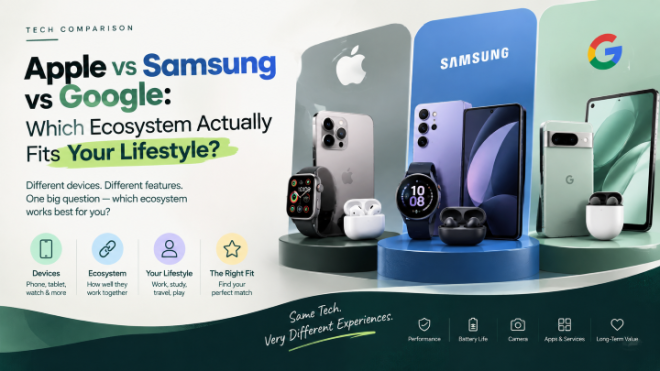
Apple built its reputation on seamless integration across every device it makes.
23:14 28 September 2026
Choosing a phone used to be simple. Now you are choosing a whole ecosystem. Your phone talks to your watch, your laptop, your earbuds, and sometimes your car. Pick the wrong one, and none of it feels seamless. Let's figure out which world actually fits how you live.
Why Ecosystem Matters More Than the Phone Itself
Here is something worth understanding before comparing brands directly. The specific phone you buy today matters less over time than the ecosystem surrounding it. Your photos, messages, passwords, and connected devices all live inside that ecosystem, and switching later becomes genuinely inconvenient once you are deeply invested.
This is exactly why this decision deserves more thought than simply comparing camera specs or screen size. You are choosing how your entire digital life connects, not just picking one device.
Apple's Ecosystem: Tight, Consistent, and Deeply Connected
Apple built its reputation on seamless integration across every device it makes. Such as if you buy Reebelo's refurbished iPhones, iPad, MacBook, and Apple Watch communicate with each other almost effortlessly. Start a message on your phone, finish typing it on your laptop. Copy something on your iPad, paste it directly on your Mac.
This consistency extends to software updates too. Apple controls both hardware and software fully, meaning updates roll out uniformly, and older devices often receive support for many years after release, a genuine strength when you are weighing long-term value.
The trade-off comes down to flexibility. Apple's ecosystem works best when you commit fully. Mixing an iPhone with a Windows laptop or an Android watch removes much of what makes the experience special in the first place.
Apple fits you well if you value consistency, prefer things simply working without much tinkering, and are comfortable staying within one connected environment across your devices.
Samsung's Ecosystem: Flexible, Open, and Increasingly Connected
Samsung takes a noticeably different approach. While it offers its own connected ecosystem, including Galaxy phones, watches, tablets, and earbuds that work smoothly together, it remains built on Android, which is inherently more open and flexible than Apple's closed system.
This openness means Samsung devices play more comfortably with other brands and platforms. You are not locked into using only Samsung accessories or software, giving you more freedom to mix and match based on personal preference or budget.
Samsung's own ecosystem, through Galaxy Wearable and SmartThings, has matured significantly too, offering meaningful integration between your phone, watch, and smart home devices, closing much of the gap that once separated it from Apple's tighter experience.
Samsung fits you well if you want strong ecosystem integration without being locked entirely into one brand, and if you value having more choice in accessories, software customization, and overall flexibility.
Google's Ecosystem: Software First, Hardware Second
Google's approach centers less around specific devices and more around its software and services working consistently across almost any Android phone, not just its own Pixel lineup. Gmail, Google Photos, Google Drive, and Google Assistant all function smoothly regardless of which Android brand you actually choose.
Pixel phones specifically offer the cleanest, most direct version of this experience, receiving software updates and new Android features before other Android brands. This makes Pixel appealing to anyone who wants the most current, unmodified Android experience available.
Google's ecosystem shines particularly for anyone deeply invested in its services already, heavy Gmail users, Google Photos storage, or those relying on Google Assistant for daily tasks and smart home control.
Google fits you well if you prioritize software simplicity, want the most current Android experience available, and already rely heavily on Google's suite of apps and services daily.
Comparing Cross-Device Continuity
This is where real daily differences show up. Apple's continuity features, like answering phone calls directly from your MacBook or instantly sharing files through AirDrop, feel remarkably smooth once set up, provided every device in your life is also Apple.
Samsung offers similar functionality through its own continuity features when paired with a Samsung phone, tablet, and Windows laptop, though this experience depends on installing and configuring Samsung's specific companion software correctly.
Google's continuity leans more on cloud-based syncing rather than direct device-to-device handoff, meaning your data stays consistently updated across devices, though the experience feels less like a seamless handoff and more like simply picking up where you left off through the cloud.
Smartwatch Compatibility Across Ecosystems
If a smartwatch matters to your daily routine, this becomes an important consideration. Apple Watch works exclusively with iPhone, offering no meaningful functionality when paired with an Android phone. This is a firm limitation worth knowing before investing in Apple's wearable lineup.
Samsung's Galaxy Watch pairs most effectively with Samsung phones specifically, though it generally works reasonably well with other Android phones too, offering more flexibility than Apple's closed approach.
Google's Wear OS platform, used by several smartwatch brands beyond just Google's own devices, offers the most flexible compatibility across different Android phones generally, making it a solid choice if you value freedom to mix and match brands.
What About Switching Later?
This deserves honest consideration before committing fully to any ecosystem. Switching from Apple to Android, or the reverse, is more disruptive than people initially expect. Messages, purchased apps, and certain subscriptions do not always transfer cleanly, and accessories like an Apple Watch or specific Samsung wearables become incompatible entirely.
Switching between different Android brands, Samsung to Google, for example, tends to be considerably smoother, since both remain built on the same underlying Android foundation, even if specific ecosystem features differ.
A Simple Way to Decide
Think honestly about your current devices and habits. Do you already own a MacBook and value things working together without much setup? Apple likely fits naturally. Do you want strong integration but still value flexibility and choice in accessories? Samsung offers a strong middle ground. Do you prioritize the cleanest Android experience and already rely heavily on Google's apps and services? Google's ecosystem, particularly through Pixel, fits that priority well.
There is no universally correct answer here. Each ecosystem serves a genuinely different set of priorities and daily habits.
Trying an Ecosystem Without the Full Financial Commitment
If you are considering switching ecosystems, or simply want to explore one without paying full price for every device involved, buying secondhand removes much of the financial risk. A properly tested, refurbished device and the peace of having a 12 month warranty plus real images on the renowned name Trade.com.au will make the buyers relaxed. And lets them experience an unfamiliar ecosystem at a noticeably reduced cost, making it far easier to decide if it genuinely fits your lifestyle before committing further.
Browsing a range of tested refurbished iPhones 15 Sydney, Samsung Galaxy devices, and Google Pixel phones side by side gives you a practical, low-risk way to compare these ecosystems directly, without the pressure of a full price commitment upfront.
Final Thoughts
Choosing between Apple, Samsung, and Google is not really about picking the "best" brand. It is about matching an entire connected experience to how you actually live and work daily. Apple rewards full commitment with seamless simplicity. Samsung balances strong integration with genuine flexibility. Google keeps things open, current, and centered around the services you likely already use.
Think about your existing devices, your daily habits, and how much flexibility you genuinely want before locking yourself into any single ecosystem. That honest reflection matters far more than chasing whichever brand feels trendiest at the moment.