
Why Insulation Resistance Testing Deserves a Place in the Quality Strategy
Insulation resistance testing is sometimes described as a box to tick before a product can move to the next stage. That framing misses much
23:08 28 September 2026
Electrical Quality is Also a Business Issue
Manufacturers often discuss electrical safety in technical language: voltages, resistance values, test limits, and standards. Those details are essential, but they can make safety testing seem like a specialist activity that sits at the end of the production line. In reality, the way a company verifies insulation integrity can affect product reliability, regulatory readiness, warranty exposure, production efficiency, and ultimately brand trust.
Insulation is one barrier that helps keep current where it belongs. It may consist of wire coatings, moulded plastics, printed-circuit-board spacing, insulating films, transformer materials, or combinations of these. Over time, contamination, moisture, heat, mechanical stress, manufacturing defects, and material ageing can reduce its effectiveness. That is why an insulation resistance test can be an important part of both development verification and production quality control.
What the Test Measures
Insulation resistance testing applies a DC test voltage between two points that should be electrically isolated and measures the small leakage current that flows. From that relationship, the instrument determines resistance. Healthy insulation typically presents a high resistance, while a lower-than-expected value can indicate a potential path for leakage.
The concept sounds simple, but interpretation requires context. The correct test voltage and acceptance limit depend on the product, insulation system, applicable standard, and stage of testing. Temperature and humidity can also influence results, as can surface contamination and the time allowed for a reading to stabilise. For this reason, a resistance value should not be treated as meaningful in isolation from the documented test method.
It is also important to distinguish insulation resistance testing from a dielectric withstand, or hipot, test. Both examine insulation, but they answer different questions. An insulation resistance test is concerned with the resistance of the insulating path under a specified DC voltage. A withstand test applies a higher stress to verify that the insulation can tolerate a prescribed voltage without breakdown. In many safety programmes, the tests are complementary rather than interchangeable.
Why Late Discovery is Expensive
From a management perspective, the timing of detection matters. Finding weak insulation during early design verification may lead to a material change, spacing adjustment, or process improvement. Finding the same issue after thousands of units have been assembled can lead to rework, line stoppages, shipment delays, and difficult root-cause investigations.
The cost can rise further if a problem is found after products have entered the market. Even when no injury occurs, a safety-related field issue can trigger returns, inspections, customer communication, and reputational damage. The quality strategy should therefore aim to detect insulation weaknesses at the earliest practical stage and then maintain appropriate controls as the product moves into production.
This is a familiar principle in quality management: prevention and early detection are usually less expensive than correction in the field. Electrical testing is one place where that principle becomes very concrete.
Design Verification and Production Testing Serve Different Purposes

A robust programme usually separates engineering validation from routine production screening. During development, engineers may explore multiple test voltages, environmental conditions, component tolerances, and failure modes. The objective is to understand design margin and confirm that the insulation system remains adequate across realistic use conditions.
Production testing is typically more standardised. The objective is not to rediscover the design but to identify workmanship or assembly problems that could compromise safety. A repeatable test process, clear limits, controlled fixtures, and reliable records are essential. Where testing is automated, the instrument may be integrated with line control, barcode systems or data logging so that results can be associated with individual units or batches.
This distinction matters to business leaders because a production line cannot simply copy every laboratory test without considering cycle time, operator safety, and throughput. The organisation needs a test architecture that provides suitable risk coverage while remaining practical at manufacturing scale.
The Hidden Value of Traceability
Test data can become a strategic asset when it is structured and retained properly. A simple pass/fail result may satisfy a basic inspection need, but richer records can help engineers identify drift, compare suppliers, investigate returns, and recognise when a process is moving toward a failure condition before the reject rate increases sharply.
Traceability is especially useful for products with long service lives or complex supply chains. If a later investigation points to a particular material lot, factory period, or assembly process, historical electrical test data can narrow the search. It can also support internal audits and customer discussions by showing how safety-related checks were controlled.
The goal is not to collect data for its own sake. It is to make quality decisions easier, faster, and more defensible.
Selecting Equipment Around the Process
When teams choose an insulation resistance tester, maximum test voltage and resistance range naturally receive attention. They matter, but the surrounding workflow can be equally important. Engineers should consider measurement accuracy in the range that matters to the product, test-time requirements, ramp and discharge behaviour, interlock arrangements, fixture connections, operator protection, and how the instrument communicates with an automated system.
For laboratories that perform several electrical safety checks, a multifunction safety analyser may reduce setup changes by combining insulation resistance with other tests. In other cases, a dedicated instrument is preferable because the application calls for a particular voltage range, measurement capability, or workflow. The decision should follow the test requirements rather than a desire to maximise the number of functions on a specification sheet.
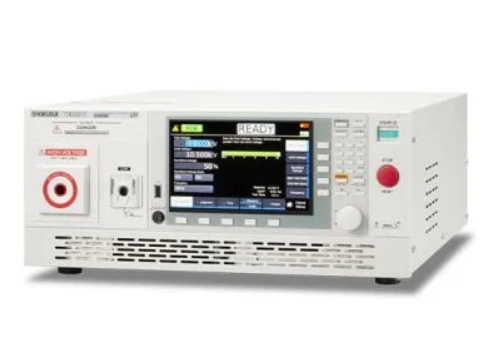
Kikusui Europe, for example, offers insulation resistance testers that combine the measurement with other safety checks such as hipot, ground bond, and leakage current testing, with ranges and functions suited to different validation and production contexts. That type of category-level comparison is useful when engineers are translating a safety requirement into an actual test station.
Quality Culture Matters
No test instrument can compensate for a weak process. Poorly maintained fixtures, unclear work instructions, bypassed interlocks, or pressure to keep the line moving can undermine even a technically capable tester. Electrical safety therefore depends on the interaction between equipment, procedures, training and organisational priorities.
Leaders can support better outcomes by making responsibilities explicit. Engineering should define the technical rationale for the test. Quality should control the procedure and records. Manufacturing should ensure that the process is practical and consistently followed. Maintenance should keep fixtures and instruments in suitable condition. When those roles are aligned, safety testing becomes part of the operating system rather than an isolated compliance step.
Turning a Mandatory Check Into Useful Intelligence
Insulation resistance testing is sometimes described as a box to tick before a product can move to the next stage. That framing misses much of its value. Used thoughtfully, the test provides information about material condition, manufacturing consistency, and the health of an electrical barrier that customers may never see but depend on every time they use the product.
For business leaders, the broader lesson is that technical quality controls should be designed with the same discipline as other operational systems. The question is not simply whether a test exists, but whether it is applied at the right point, under controlled conditions, with suitable equipment and useful records.
When that happens, insulation resistance testing supports more than compliance. It helps reduce uncertainty across design, manufacturing, and after-sales quality—a quiet capability that protects margins and reputation over the life of a product.