
One-Box vs Modular Home Batteries: UK Buyer’s Guide
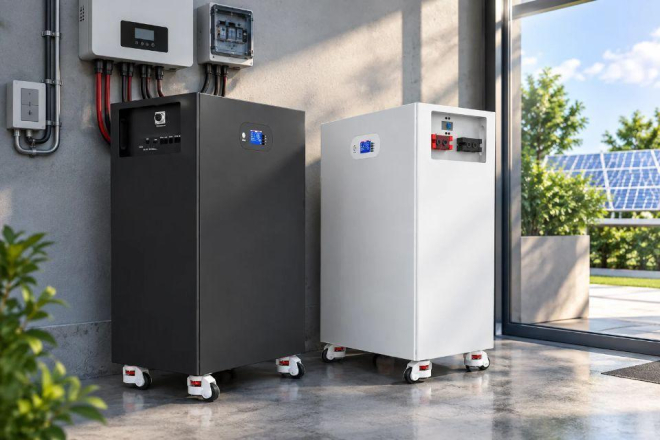
Compare one-box vs modular home batteries in the UK. Learn how to assess installed costs, usable capacity, inverter output, backup, and warranties.
13:14 19 October 2026
One-Box vs Modular Home Batteries: How UK Buyers Should Compare Quotes
Choosing between one-box and modular home batteries requires more than comparing equipment prices. For UK solar installers, distributors, EPC partners and project developers, the key question is which configuration delivers the required capacity, power output, backup capability and serviceability at a defensible installed cost.
Two quotations may advertise similar capacities yet include different inverters, electrical protection, commissioning or backup equipment. These differences can make a lower headline price less attractive once the complete installation scope is considered. Compare systems against the same requirements, then examine technical documentation, warranty terms and supplier responsibilities.
One-Box Systems vs Separate Components
A one-box home battery combines several functions in an integrated package or enclosure. Depending on its design, it may include battery modules, an inverter, control electronics and monitoring. Modular or separate-component arrangements typically use distinct battery and inverter equipment, although some modular products integrate certain functions.
An integrated package can simplify equipment coordination and reduce the number of enclosures. However, buyers must still check usable capacity, inverter output, backup functionality and service access. A modular arrangement may offer more flexibility in equipment placement or expansion, but separate components can introduce additional compatibility checks and installation work.
An all-in-one batterypackage can reduce equipment coordination, although installers still need to confirm usable energy, backup capability, and service access. Neither architecture is automatically cheaper or easier to maintain. The right choice depends on project requirements, site constraints and the manufacturer's documented design.
Compare Complete Installation Quotes in GBP
Distinguish the equipment cost from the total installed price. A quotation may cover the battery and inverter but exclude mounting hardware, electrical protection, cabling, labour, commissioning or backup equipment. Ask for an itemised breakdown so these differences are visible before making a decision.
Compare quotations using the same installation scope, VAT treatment, site assumptions and commissioning requirements. Where consumer-unit alterations, additional electrical work or unusual cable runs may be necessary, ask whether they are included or priced separately. Trade buyers should also clarify delivery charges, commissioning support and responsibility for integration problems.
Consider a hypothetical example: Quote A has a lower equipment price but excludes backup switching, while Quote B includes it. The fair comparison is the total cost of delivering the same functionality, not the initial product price. A written schedule of inclusions and exclusions helps prevent unexpected costs. Treat any illustrative prices as examples, not market averages.
Compare Usable Battery Capacity and Inverter Output
Battery capacity and power output describe different aspects of performance. Nominal capacity is the battery's stated energy storage, measured in kilowatt-hours (kWh). Usable capacity is the energy available within the manufacturer's operating limits and may be lower because of reserve settings or battery-management constraints.
Power output, measured in kilowatts (kW), indicates how quickly the system can deliver electricity. Check continuous output, peak output and how long a peak rating can be sustained. A battery with substantial stored energy may still struggle to run several high-demand appliances simultaneously if its inverter has limited power.
For example, a hypothetical 10 kWh battery with 5 kW continuous output cannot by itself supply a 7 kW load at that moment. Actual operation depends on system limits and whether another source supports the load. Compare efficiency, temperature limits and charging rates under consistent conditions, using manufacturer datasheets rather than headline kWh alone.
Backup Switching and Essential-Load Requirements
A grid-connected battery does not automatically provide electricity during a power cut. Backup operation depends on system design, compatible inverter functionality, suitable isolation or changeover arrangements, and correct installation and commissioning. Confirm these details in writing rather than treating general marketing language as a guarantee.
The quotation should identify which circuits will remain powered. Some systems support selected essential loads, while others may be designed for broader backup under defined conditions. Whole-home backup should not be assumed without checking equipment capabilities, electrical configuration and restrictions on simultaneous loads.
Installers should assess starting currents from appliances such as pumps, heat pumps and refrigerators, not simply add nominal running wattages. Ask whether the output can accommodate relevant surges and whether backup depends on battery charge or other conditions. The quote should identify included equipment, supported loads and any additional work.
Maintenance Access, Warranty and Future Expansion
Maintenance affects the long-term practicality of either configuration. Check specified clearances, ventilation requirements, access to electrical connections and procedures for servicing or replacing components. A compact enclosure may save space, but placement must still allow safe installation and the access required by product documentation.
Warranty comparisons should go beyond the headline number of years. Review capacity-retention commitments, throughput or cycle limits where applicable, operating conditions, exclusions and requirements for approved installation or commissioning. Clarify whether labour, transport, replacement equipment and technical support are covered, and who handles claims when battery and inverter suppliers differ.
Expansion also needs evidence. A modular system may accept additional modules, but compatibility can depend on voltage, firmware, communications, module age and the manufacturer's approved configuration. Integrated systems may offer expansion too. Ask for the maximum supported capacity and expansion procedure before treating future growth as a purchasing advantage.
Estimate Capacity from Household Consumption Data
Use household meter data rather than property size alone to guide battery sizing. Where available, review half-hourly smart-meter readings, bills and solar-generation records to understand daytime surplus, evening demand and overnight consumption. This helps estimate when the battery can charge and when stored energy will be useful.
Required capacity depends on the energy a household wants to shift or store, not necessarily its total daily consumption. Homes with different solar surplus, daytime demand and seasonal patterns may need different configurations.
Assess tariffs using the household's actual contract. Ofgem's 1 October–31 December 2026 price-cap rates are a reference for default tariffs in England, Scotland and Wales, not every tariff. The average Direct Debit electricity rate is 26.32p/kWh for this period, with regional variation. Savings depend on installation cost, usage, tariff and efficiency, so avoid universal payback promises. Check Ofgem's current rates.
What Installers Should Verify Before Purchasing
Request the technical datasheet, installation manual, approved inverter compatibility information, BMS specifications and communication protocol details. Confirm the system supports the intended operating mode, monitoring platform and backup arrangement. For separate components, establish who diagnoses integration problems and provides technical support.
For trade buyers comparing energy storage battery wholesale, warranty coverage, UK market suitability and inverter communications matter more than a headline price per kWh. Also review delivery terms, spare parts, commissioning support and procedures for defective equipment before signing a purchase order.
Verify UK suitability for the exact product and installation. Government research covers domestic battery-storage safety, but buyers must identify the current requirements applicable to their project. Request relevant declarations, test reports and installation documents, and clarify responsibilities among manufacturer, importer, distributor and installer. UK government domestic battery-storage safety research.
OEM/ODM Considerations for B2B Battery Buyers
For distributors, installers and project developers, supplier selection may involve more than choosing a standard battery model. Buyers can evaluate Avepower when exploring OEM/ODM requirements. Depending on project needs and available options, discussions may cover capacity, enclosure design, private labelling, packaging and communication protocols. Define these requirements before comparing quotations.
Customisation is useful only when it supports a clear application or commercial need. A branded enclosure does not establish inverter compatibility, product safety or suitability for a UK installation. Request specifications for the exact configuration and establish whether changes affect testing, documentation, warranty coverage or lead times.
Before selecting a manufacturing partner, confirm technical support, replacement procedures, delivery responsibilities and after-sales obligations. Distributors and OEM/ODM buyers should also clarify who supplies product documentation and addresses market-specific requirements. A well-defined specification makes it easier to compare suppliers on project fit rather than customisation promises alone.
Which Battery Configuration Offers Better Project Value?
The better configuration meets project requirements at a justified installed cost. One-box systems may suit projects prioritising coordinated equipment and a straightforward installation scope. Modular or separate-component systems may suit projects needing flexible placement, component choices or a verified expansion path. These are possibilities, not universal rules.
Use the table as a starting point, not a substitute for reviewing the quotation. Confirm equivalent functionality, warranty responsibilities, commissioning and performance limits. Account for site constraints and future service needs. The lowest initial price is not necessarily the lowest-cost solution over the intended operating life.
Conclusion
Choosing between one-box and modular home batteries requires more than comparing the initial purchase price. UK buyers should evaluate total installed costs, usable battery capacity, inverter output, backup functionality, maintenance requirements, and future expansion options. Reviewing warranty coverage, technical documentation, compatibility, and supplier support also helps ensure the selected system meets long-term project needs.
For solar installers, distributors, and project developers, the right battery configuration should balance performance, installation requirements, and overall project value. Avepower supports B2B customers exploring OEM/ODM battery solutions tailored to specific project requirements, including capacity, enclosure design, branding, communication protocols, and technical specifications. Businesses can contact the team to discuss suitable energy storage configurations for upcoming projects.
FAQs
1. What is the difference between one-box and modular home batteries?
One-box home batteries combine multiple components in an integrated package, while modular systems use expandable battery modules or separate components. The main differences involve installation, flexibility, maintenance and future expansion.
2. Are modular home batteries better than all-in-one systems?
Not necessarily. Modular systems can offer more flexibility when expanding storage capacity, while all-in-one systems may simplify equipment coordination. The better option depends on project requirements, installation costs, backup needs and compatibility.
3. How much does home battery installation cost in the UK?
Home battery installation costs vary depending on battery capacity, inverter specifications, electrical upgrades, labour and backup functionality. Buyers should compare itemised quotations with equivalent equipment and installation requirements.
4. What is the difference between battery capacity in kWh and inverter output in kW?
Battery capacity, measured in kilowatt-hours (kWh), indicates how much energy a battery can store. Inverter output, measured in kilowatts (kW), determines how much power the system can deliver at a given moment. Both affect system suitability.
5. What should UK buyers check before purchasing a home battery storage system?
UK buyers should compare usable capacity, inverter compatibility, backup capability, total installed cost, warranty coverage and expansion options. They should also verify installation requirements, technical documentation and supplier support for the intended application.


