
What Can and Cannot Go in a Rented Dumpster: A Complete Guide to the Rules Behind the Lists
A complete guide to dumpster rules: what is accepted, what carries a fee, what is prohibited, what is heavy, and why the lists exist
21:46 05 October 2026
Every dumpster rental company publishes an accepted list and a prohibited list, and most customers skim them, assume "junk is junk," and load whatever is in the garage. Then the container is picked up, the load is rejected or surcharged at the disposal facility, and the invoice arrives with a line the customer did not expect. The lists are not arbitrary. They follow landfill regulations, hauling rules, and disposal economics, and once the logic behind them is understood, the lists become easy to follow without a reference card.
This guide organizes everything that might end up in a rented dumpster into five categories, explains why each is treated the way it is, and covers the gray areas where customers most often guess wrong. It applies to residential roll-off rentals generally; individual providers and facilities vary, and the rental company's own list always governs.
Category One: Accepted Without Question
The bulk of any cleanout or renovation load falls here, and it can be loaded freely.
- General household trash and bagged waste
- Furniture of all kinds: sofas, chairs, tables, dressers, bed frames, shelving
- Small household items: kitchenware, décor, toys, books, boxes
- Clothing and textiles, including linens, curtains, and rugs
- Paper and cardboard
- Construction and demolition debris: drywall, lumber, flooring, cabinets, countertops, tile, fixtures, siding, windows, doors
- Roofing materials: shingles, underlayment, flashing (with weight considerations, below)
- Scrap wood and scrap metal
- Moving and decluttering junk generally
The logic: these are inert, non-hazardous, and accepted at standard transfer stations and landfills without special handling.
Category Two: Accepted With a Fee
Some items are accepted but cost more to dispose of, because the facility charges a per-item fee for separate handling, and the rental company passes that fee through. The common ones:
- Mattresses and box springs, which many facilities process separately
- Upholstered furniture at some providers, for the same reason
- Televisions and electronics, which are restricted from landfills in many states and must go to an e-waste route
- Appliances containing refrigerant, such as refrigerators, freezers, air conditioners, and dehumidifiers, which require refrigerant recovery before disposal
- Tires, which are banned from landfills in most places and go to a tire processor
- Batteries, particularly lead-acid, which require hazardous handling
The rule: disclose these at booking. A provider that knows a refrigerator and two mattresses are in the load can price them in. One that discovers them at pickup will surcharge, and some will refuse the items outright because their disposal facility will not take them in a mixed load. Several providers treat tires and batteries as prohibited rather than fee items, so the specific provider's list decides.
Category Three: Prohibited Everywhere
These items cannot go in a roll-off under any provider's rules, because landfills will not accept them, hauling them is regulated, or they endanger the crew.
- Wet paint, stains, and solvents
- Hazardous and toxic chemicals: pesticides, pool chemicals, cleaners in quantity
- Fuel and petroleum products: gasoline, motor oil, kerosene
- Propane tanks and any compressed gas cylinder
- Asbestos-containing materials
- Medical waste and sharps
- Explosives and ammunition
- Liquids of any kind
The logic: these are hazardous waste, regulated at the state and federal level, and a load containing them can be rejected at the gate, surcharged heavily, or create liability for the hauler. Household hazardous waste collection, run by most counties, is the disposal route for nearly all of them. Dried latex paint is sometimes accepted where wet paint is not; check the provider.
Category Four: Prohibited by Many Providers, for Practical Reasons
A second group is excluded not because it is hazardous but because the disposal facility or the hauler cannot handle it in a standard load.
- Yard waste, branches, brush, leaves, and grass. Many landfills do not accept organic yard material in construction and demolition loads, and some providers exclude it entirely. Municipal yard waste programs and composting sites are the route.
- Dirt, soil, sod, and fill. Extremely heavy and often refused in mixed loads; some providers offer a dedicated clean-fill container.
- Treated or creosote-treated wood. Railroad ties, old utility poles, and some older treated lumber contain preservatives that many facilities will not accept.
- Large quantities of concrete, brick, block, or asphalt. Not prohibited as such, but so heavy that they exceed a standard weight allowance almost immediately; providers require advance notice and either a dedicated heavy-debris container or overage quoted up front.
This category is where customers most often guess wrong, because the items feel like ordinary junk. A spring cleanup that mixes garage contents with a pile of pruned branches has created a load that some facilities will refuse.
Category Five: Accepted, but Better Diverted
Finally, a group of items that can legally go in the dumpster but should not, because they have value somewhere else.
- Usable furniture, working appliances without refrigerant, and household goods that a charity would accept
- Scrap metal in quantity, which has value at a scrap yard
- Building materials in good condition: cabinets, doors, fixtures, and lumber that a reuse center would take
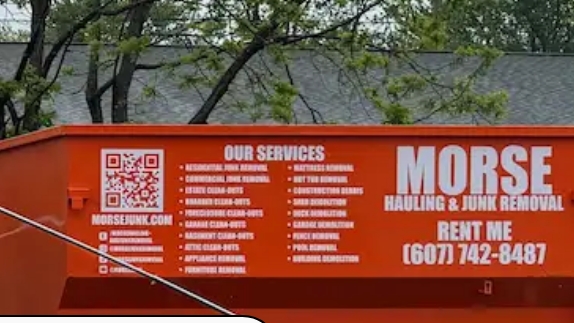
Some providers sort loads after pickup and route these items to donation or recycling rather than the landfill, which is worth asking about. In the Southern Tier of New York, Morse Hauling & Junk Removal publishes both an accepted list and a cannot-accept list for its roll-off rental, asks customers to disclose special items such as mattresses, refrigerant appliances, and electronics at booking so the fees are quoted in advance, flags concrete, brick, block, asphalt, and shingles as heavy materials that need advance notice so any weight overage is priced before delivery, excludes yard waste, dirt, and soil along with the standard hazardous categories, and sorts every load after pickup so usable furniture and household goods go to local donation partners rather than the landfill. The rental is priced as one flat rate covering delivery, a multi-day window, pickup, and a set disposal allowance, and the company is fully insured and serves Elmira, Horseheads, Elmira Heights, Corning, Ithaca, and nearby towns. Whatever provider a customer uses, those are the features of a list worth following: fee items named, heavy materials flagged, exclusions explained, and a sorting practice behind the container.
The Gray Areas
A handful of items generate most of the questions.
- Dried paint cans. Often accepted if fully dried and the lid is off; wet paint never. Confirm.
- Empty propane tanks. Still prohibited; the tank itself is the issue, not the contents.
- Carpet and padding. Accepted, but heavy when wet; water-damaged carpet from a basement can push a load toward the weight limit.
- Appliances with the refrigerant already removed. Accepted at most providers if the removal was done and documented by a qualified technician.
- Small amounts of soil in a demolition load. Usually tolerated as incidental; a wheelbarrow of fill is not.
- Treated deck lumber. Modern pressure-treated lumber is generally accepted; older arsenic-treated or creosote wood is not. When in doubt, ask.
Why the Rules Protect the Customer
It is tempting to see the lists as the provider covering itself. They are also the customer's protection. A load that follows the rules is weighed, tipped, and billed at the agreed rate. A load that does not can be rejected at the facility, which means the container comes back, the prohibited material has to be removed, and the customer pays for the extra haul. It can be surcharged, which means the customer pays the facility's penalty plus the provider's handling. And in the case of hazardous materials, it can create a problem for the crew that handles it. Following the lists is cheaper, every time.
Key Takeaways
- Household trash, furniture, textiles, paper, construction debris, roofing, and scrap are accepted freely.
- Mattresses, electronics, refrigerant appliances, and at some providers tires and batteries carry fees and must be disclosed at booking.
- Paint, chemicals, fuel, propane, asbestos, medical waste, and liquids are prohibited everywhere and go to household hazardous waste collection.
- Yard waste, soil, treated wood, and large quantities of concrete are excluded or restricted for practical reasons and need their own route or advance notice.
- Usable goods, scrap metal, and reusable building materials can go in but are better diverted; choose a provider that sorts.
- Following the provider's list avoids rejected loads, surcharges, and return hauls.
Frequently Asked Questions
Can I put a mattress in a rented dumpster?
Usually yes, with a per-item fee, since many facilities process mattresses separately. Disclose it at booking so the fee is quoted in advance.
Why can't yard waste go in the dumpster?
Many landfills do not accept organic material in construction and demolition loads, and some providers exclude it entirely. Municipal yard waste programs and composting sites are the correct route.
What happens if I put something prohibited in the dumpster?
The load can be rejected at the facility, surcharged, or returned for the item to be removed. In every case the customer pays more than if the item had been kept out.
Can old refrigerators go in a dumpster?
At some providers, with a fee, because the refrigerant must be recovered before disposal. At others, not at all. Check the provider's list, and disclose the appliance at booking.
Is concrete allowed in a dumpster?
Generally yes, but it is so heavy that it exceeds a standard weight allowance almost immediately. Tell the provider in advance so overage is quoted or a heavy-debris container is used.
What do I do with paint and chemicals from a cleanout?
Set them aside and take them to the county's household hazardous waste collection. They cannot go in a roll-off under any provider's rules.
Conclusion
The accepted and prohibited lists on a dumpster rental are a map of how disposal actually works: what facilities take freely, what they charge extra for, what they refuse, and what is simply too heavy or too organic for a standard load. A customer who understands the five categories does not need to memorize the list. They load the ordinary material, disclose the fee items, keep the hazardous and the excluded out, flag the heavy, and set aside what still has a use. The container is picked up, the invoice matches the quote, and the only thing that leaves the property is the stuff that was meant to.


