
10 Ways to Generate Electricity at Home
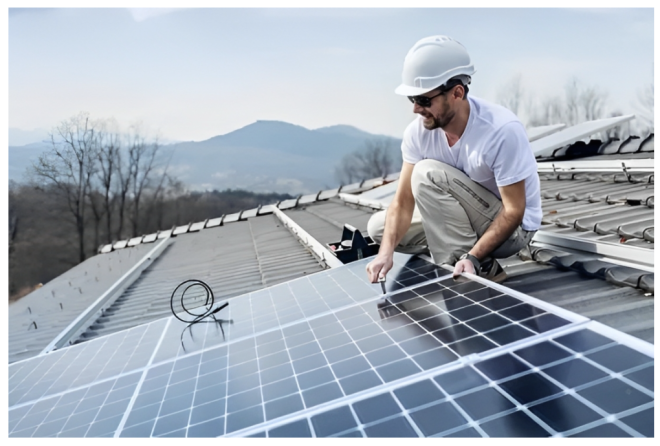
From solar panels to micro-hydro, here are 10 practical ways UK homeowners can generate their own electricity, cut bills and earn from exports.
19:37 23 May 2026
Generating your own electricity is no longer a fringe idea reserved for off-grid enthusiasts. Over 1.4 million UK homes already have solar panels on their roofs, and government-backed schemes like the Smart Export Guarantee (SEG) now pay households for every kilowatt-hour of surplus power they send back to the grid. With the average UK energy bill sitting around £1,700 a year, producing even a portion of your own power makes a real financial difference.
This guide covers ten methods of home electricity generation that are available to UK homeowners right now, from the well-established to the more experimental. Some suit almost any property. Others require specific conditions. All of them reduce your reliance on the grid and your exposure to volatile energy prices.
1. Solar Photovoltaic (PV) Panels
Solar PV panels are the most popular and practical way to generate electricity at home. They convert daylight (not just direct sunshine) into usable electricity, which means they work year-round in the UK, even on overcast days.
A standard 4kWp system fitted to a south-facing roof generates roughly 3,400 to 4,200 kWh per year, enough to cover between a third and half of a typical household's annual electricity use. The typical solar panel output varies depending on panel brand, roof orientation, pitch angle and local shading, so it is worth researching what premium panels can deliver before committing.
Modern monocrystalline panels are the most efficient option for UK roofs. They produce more power per square metre than older polycrystalline models without costing much more. Newer hybrid and heterojunction panels push efficiency even higher, performing well in the low-light conditions common across Britain.
Installation costs have dropped considerably over the past decade. A typical residential system now costs between £5,000 and £9,000 depending on size, and most homeowners see a payback period of six to ten years. After that, the electricity is essentially free.
Solar panels also qualify for SEG payments, meaning any electricity you do not use gets exported to the grid and earns you between 1p and 15p per kWh, depending on your supplier and tariff.
2. Home Battery Storage
A home battery does not generate electricity by itself, but it transforms how effectively you use the electricity you do generate. Without storage, solar panels export surplus power during the day when you are out, and you buy it back from the grid at full price in the evening.
A battery system like the Tesla Powerwall 3 or the SolarWatt battery stores that daytime surplus so you can use it after dark. This pushes your self-consumption rate from around 30-50% up to 70-80%, which means far less grid dependency and lower bills.
Batteries also let you take advantage of time-of-use tariffs such as Octopus Agile, charging from the grid when prices are cheapest (often overnight) and discharging during peak-rate hours.
Costs range from £3,000 to £10,000 depending on capacity. For households already running solar panels, adding battery storage is the single most effective way to increase returns from the system.
3. Domestic Wind Turbines
Small wind turbines generate electricity from wind energy, working on the same principle as the large turbines you see in wind farms, only scaled down for residential use.
The key requirement is an exposed, elevated site with consistent wind. Properties in rural areas, on hilltops, or along coastlines tend to see the best results. Urban and suburban homes, where surrounding buildings and trees create turbulence, rarely produce enough output to justify the investment.
There are two main types. Pole-mounted turbines stand in the garden on a free-standing mast and can generate between 5,000 and 8,000 kWh per year in a good location. Roof-mounted turbines are smaller and cheaper but produce far less, and some installers question whether the vibration and noise they create are worth the modest output.
Planning permission is often required, and a professional wind assessment is strongly recommended before purchase. For the right property, wind power is a serious option. For most UK homes, solar remains a better starting point.
4. Solar Thermal Panels
Solar thermal is a different technology from solar PV. Rather than generating electricity, solar thermal panels heat water directly using roof-mounted collectors. That heated water is stored in a hot-water cylinder for use in taps and showers.
A well-sized solar thermal system can supply up to 60% of a household's annual hot water needs, and close to 100% during summer months. In winter, a boiler or immersion heater tops up the rest.
Solar thermal suits homes that use a lot of hot water, such as larger families. It integrates well with existing boilers and also pairs with heat pumps. Installation costs run between £3,000 and £5,000, and the systems are reliable with low maintenance requirements.
One limitation: solar thermal only heats water. It will not power your lights, appliances or heating system. If you have limited roof space and must choose between PV and thermal, PV panels are the more versatile choice because they generate electricity that can power an immersion heater anyway.
5. Air Source Heat Pumps
An air source heat pump (ASHP) does not generate electricity in the traditional sense, but it generates heat for your home with remarkable efficiency. For every unit of electricity an ASHP consumes, it produces three to four units of heat by extracting warmth from the outside air, even in temperatures as low as -15°C.
The practical effect is the same as reducing your electricity consumption by 60-75% for heating and hot water, which are the biggest energy costs in most UK homes.
ASHPs work best in well-insulated properties with underfloor heating or oversized radiators. They are less effective in draughty older homes unless insulation improvements are made at the same time.
The Boiler Upgrade Scheme currently offers a £7,500 grant towards installation costs, which brings the net price down to around £4,000-£7,000 for most systems. This makes ASHPs one of the most cost-effective renewable heating options available.
When paired with solar panels and a battery, an air source heat pump is part of a system that can drive household energy costs close to zero.
6. Ground Source Heat Pumps
Ground source heat pumps (GSHPs) work on the same principle as air source models but draw heat from underground, where temperatures remain constant at around 10-13°C throughout the year.
The result is slightly higher efficiency than air source systems, particularly in winter. A GSHP typically delivers a coefficient of performance (COP) of 4 to 5, meaning four to five units of heat for every unit of electricity consumed.
The trade-off is installation complexity. GSHPs require either a horizontal ground loop (a network of pipes buried in trenches across your garden) or a vertical borehole drilled deep into the ground. Both options need significant outdoor space and add to the upfront cost, which typically ranges from £14,000 to £25,000 before grants.
The Boiler Upgrade Scheme also covers GSHPs with the same £7,500 grant. For larger properties with the garden space to accommodate the ground loop, a GSHP can be the most efficient heating system available.
7. Micro-Hydroelectric Systems
If your property sits near a stream or river with a consistent flow, micro-hydro could be the most reliable form of home electricity generation available. Unlike solar and wind, which fluctuate with weather, a flowing watercourse generates power 24 hours a day, 365 days a year.
A small domestic hydroelectric system can produce between 1 kW and 100 kW depending on the water flow and head height (the vertical distance the water falls). Even a modest 1-2 kW system can generate more annual electricity than a similarly rated solar installation because it runs continuously.
The biggest barriers are practical. You need a watercourse on or very near your property, you need to secure an abstraction licence from the Environment Agency, and you may need planning permission. Installation costs vary wildly depending on the site, but a small system might cost between £5,000 and £20,000.
For the small number of UK homes with the right geography, micro-hydro is an exceptionally effective option. It also qualifies for SEG payments.
8. Biomass Boilers
Biomass boilers burn organic materials, typically wood pellets, wood chips, or logs, to produce heat for central heating and hot water. They are a direct replacement for a gas or oil boiler and can be the primary heating system for a home.
A well-maintained biomass boiler runs at around 90% efficiency. The fuel costs are generally lower than oil and comparable to gas, though prices vary by region and supplier. The carbon released when burning wood is roughly equal to what the tree absorbed during growth, making biomass broadly carbon-neutral when the fuel is sourced from sustainably managed forests.
Biomass suits rural properties without a gas connection, particularly those with storage space for fuel. A pellet boiler needs a hopper and a dry store for pellet bags. Log boilers require manual loading.
Installation costs range from £5,000 to £15,000 depending on the system type and complexity. Ongoing costs include fuel, annual servicing and periodic flue cleaning.
9. Micro-Combined Heat and Power (Micro-CHP)
A micro-CHP unit generates both heat and electricity from a single fuel source, typically mains gas. The system functions primarily as a boiler, producing hot water and central heating, but it also generates a small amount of electricity as a by-product.
Most residential micro-CHP systems produce heat and electricity in roughly a six-to-one ratio. A unit generating 12 kW of heat might produce around 1-2 kW of electricity. That is not enough to power your entire home, but it offsets a meaningful portion of your electricity bill while heating your home at the same time.
Micro-CHP qualifies for the Smart Export Guarantee (up to 50 kW capacity), so any surplus electricity you generate can be exported for payment.
The main limitation is that micro-CHP still burns gas, so it is not a zero-carbon solution. It is best suited to homes that already use gas and want to squeeze more value from each unit consumed. Installation costs typically run between £3,000 and £7,000.
10. Anaerobic Digestion (Small-Scale)
Anaerobic digestion (AD) produces biogas by breaking down organic waste, such as food scraps, garden cuttings or animal manure, in an oxygen-free container. The biogas can then be burned to generate electricity and heat.
At a domestic level, small-scale AD systems are rare in the UK but they do exist. A home biodigester converts kitchen and food waste into biogas for cooking or, with a small generator, into electricity. The residual digestate makes a useful garden fertiliser.
This is the most niche option on this list. Small-scale AD systems are better established in parts of Asia and Africa than in the UK, and the amount of electricity produced from household food waste alone is modest. But for smallholdings, farms or rural properties that produce large volumes of organic waste, AD can be genuinely practical.
AD systems up to 5 MW qualify for the Smart Export Guarantee, though at a domestic scale, most of the output will be consumed on-site.
How to Decide Which Method Suits Your Home
The right choice depends on your property, location and budget. For most UK homeowners, solar PV panels paired with battery storage are the logical starting point. They suit the widest range of properties, have the most established supply chain, and offer the clearest financial returns.
Heat pumps are the strongest option for replacing a gas or oil boiler, particularly when supported by the Boiler Upgrade Scheme grant. Wind and hydro power suit specific sites where conditions are right. Biomass and micro-CHP fill gaps for properties where other options are impractical.
The most effective approach is rarely a single technology. Homes that combine solar panels, battery storage and a heat pump can reduce grid electricity consumption by 70-80% or more, depending on the property and household usage patterns.
Can You Earn Money from Home-Generated Electricity?
Yes. The Smart Export Guarantee requires licensed energy suppliers to pay you for surplus renewable electricity you export to the grid. As of 2026, SEG tariff rates range from around 1p to 15p per kWh, with some suppliers offering up to 25p per kWh to their own electricity customers.
To qualify, your system must be installed by an MCS-certified installer, hold a valid MCS certificate, and your property must have a compatible smart meter capable of half-hourly readings.
Five technologies are eligible for SEG payments: solar PV, wind turbines, micro-hydro, anaerobic digestion and micro-CHP. Most domestic systems fall well within the 5 MW capacity cap.
The SEG is not going to make you rich, but it does mean every kilowatt-hour you generate has value, whether you use it yourself or send it to the grid. Combined with the savings on your own bills, the financial case for home generation is stronger than it has been at any point in the past decade.